How Much Does It Cost to Rent a Crane in Eastern Washington?
·12 min read
When planning a construction project, equipment installation, or machinery move in Eastern Washington, one of your first questions is likely about cost. Understanding crane rental pricing helps you budget accurately and avoid surprises. However, crane rental costs aren't one-size-fits-all—numerous factors influence the final price, making it impossible to provide a simple answer without understanding your specific requirements.
At Central Washington Crane and Rigging, we believe in transparent communication about the factors that affect crane service costs. While we provide customized quotes based on each project's unique needs, this guide explains what influences pricing and helps you understand what to expect when requesting crane services throughout the Columbia Basin and beyond.
Why Crane Rental Costs Vary
Unlike renting a piece of standardized equipment with fixed daily rates, crane services involve complex logistics, specialized equipment, skilled personnel, and project-specific planning. Every lift is different, and pricing reflects the resources, expertise, and time required to execute your specific operation safely and efficiently.
Think of crane services as a comprehensive solution rather than simple equipment rental. You're not just paying for a machine—you're investing in certified operators with years of experience, engineered lift planning and safety protocols, specialized rigging equipment and expertise, comprehensive insurance and liability coverage, equipment transportation and setup, and ongoing support throughout your project.
Understanding the variables that affect pricing helps you communicate your requirements clearly and enables crane service providers to deliver accurate quotes that reflect the true scope of your project.
Key Factors That Influence Crane Rental Costs
Several primary factors determine crane service pricing. Being aware of these elements helps you provide complete information when requesting quotes and enables you to make informed decisions about your project.
Crane Type and Capacity
The size and type of crane required for your project significantly impacts cost. Larger cranes with greater lifting capacity require more resources to operate, transport, and set up. A crane capable of lifting 165 tons differs dramatically from a smaller 30-ton unit in terms of equipment investment, operational complexity, and supporting infrastructure.
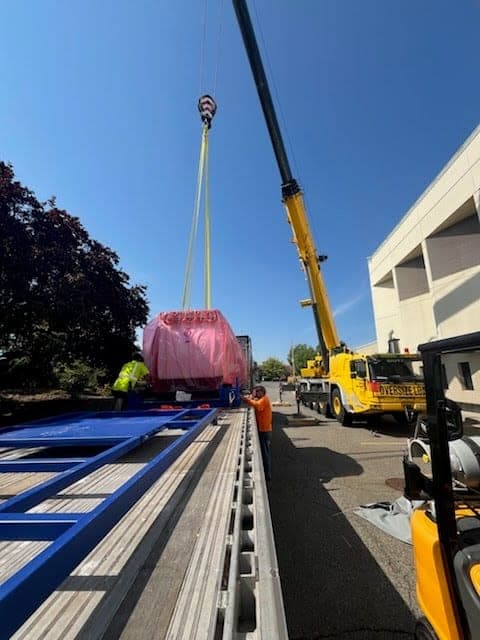
Different crane types serve different applications. All-terrain cranes like the 165-ton Grove operated by Central Washington Crane and Rigging excel at projects requiring both highway mobility and off-road capability, while rough-terrain and crawler machines cover the tighter and heavier ends of the range. These versatile machines handle everything from data center generator installation to agricultural equipment moves across varied terrain.
The crane configuration also matters. Boom length requirements, counterweight needed, and special attachments or extensions all influence the resources required and therefore affect pricing. Longer boom configurations may require additional transportation and setup time, while specialized attachments add both equipment costs and rigging complexity.
Project Duration
How long you need crane services dramatically affects total cost. Projects fall into several general categories in terms of duration.
Single-day lifts involve mobilizing equipment to your site, executing the planned lifts, and demobilizing. These projects incur mobilization costs for a relatively short operational period, which affects the per-hour cost structure.
Multi-day projects spread mobilization costs over longer periods and may offer better value for extended operations. If you need crane support for several days or weeks, the per-day cost typically decreases as duration increases.
Ongoing or recurring needs may benefit from different pricing structures that reflect the sustained commitment of equipment and personnel. Food processing facilities, manufacturing plants, and construction projects with multiple phases often fall into this category.
Understanding your timeline helps crane service providers structure pricing appropriately and may reveal opportunities for cost optimization through scheduling efficiency.
Location and Mobilization
Where your project is located affects overall costs through several mechanisms. Distance from the crane service provider's base of operations influences mobilization expenses including fuel, transport time, and equipment movement logistics.
Operating from Moses Lake, Central Washington Crane and Rigging provides efficient service throughout the Columbia Basin and into Northern Idaho and Eastern Oregon. Our central location minimizes mobilization costs for projects across this region compared to bringing equipment from Western Washington or more distant locations.
Site accessibility also factors into costs. Projects with easy highway access and straightforward site entry differ from those requiring permits for oversize loads, route surveys for clearance obstacles, special arrangements for access across private property, or navigation of difficult terrain to reach the lift location.
Remote jobsites in rural Eastern Washington, Northern Idaho, or Eastern Oregon may involve additional logistics, but our regional experience means we understand these challenges and plan accordingly.
Lift Complexity and Planning Requirements
Simple, straightforward lifts require less planning and preparation than complex, technical operations. Factors that increase lift complexity include loads approaching crane capacity limits, operations requiring engineered lift plans with PE-stamped calculations, critical lifts where mistakes could result in significant consequences, multiple crane operations involving coordination of equipment and crews, lifts in congested areas with limited space for setup and operation, and work near power lines requiring special safety protocols.
Complex lifts demand additional planning time, engineering analysis, specialized rigging equipment, and enhanced safety measures. These requirements appropriately increase costs to ensure safe, compliant operations.
At Central Washington Crane and Rigging, we provide comprehensive lift planning services including engineered calculations when required. This upfront investment in planning prevents problems during execution and ensures regulatory compliance.
Required Services and Support
Crane services encompass more than just equipment and an operator. Consider what's included in your project scope.
Operated and maintained services provide complete solutions including certified NCCCO operators, rigging personnel when needed, equipment inspection and maintenance, insurance coverage, and project coordination. This comprehensive approach simplifies your planning and ensures all personnel meet qualification requirements.
Additional services might include specialized rigging equipment such as spreader beams, custom rigging design and engineering, machinery moving beyond basic crane lifts, commercial storage for project materials or equipment, and transloading services for material handling.
Understanding what services your project requires helps generate accurate quotes and prevents mid-project surprises when additional needs emerge.
Timing and Scheduling
When you need crane services affects availability and potentially pricing. Construction season in Eastern Washington runs heavily from spring through fall, with peak demand during summer months when weather conditions are most favorable.
Projects requiring immediate or emergency response may incur premium pricing reflecting the priority accommodation and schedule disruption for the crane service provider. Conversely, flexible scheduling that allows providers to optimize equipment utilization may offer cost advantages.
Weekend, holiday, or after-hours work typically involves additional costs reflecting premium time for operators and support personnel. When possible, scheduling during regular business hours provides cost efficiency.
Understanding What's Included
When comparing crane service quotes, understanding exactly what's included in the price prevents apples-to-oranges comparisons that may mislead your decision-making.
Comprehensive Service vs. Bare Equipment Rental
Some providers offer bare equipment rental where you receive the crane but must supply your own certified operator, rigging equipment, insurance coverage, and support services. While this might appear less expensive initially, the total cost including all necessary elements often exceeds comprehensive service pricing.
Professional crane service companies typically provide operated and maintained services that include everything needed for safe, compliant operations. This comprehensive approach eliminates the burden of coordinating multiple vendors, ensures all personnel meet certification requirements, provides appropriate insurance coverage, and delivers single-point accountability for the entire operation.
Mobilization and Demobilization
Transportation of crane equipment to and from your jobsite represents a real cost that must be accounted for in project budgets. This includes fuel and transport time, permits if required for oversize loads, equipment preparation for transport, and setup and teardown at the jobsite.
Mobilization costs are often structured as fixed charges reflecting the actual resources required regardless of how long the crane remains on site. Understanding this helps explain why very short projects may have higher effective hourly rates—mobilization costs are spread over fewer operational hours.
Operator and Support Personnel
Certified crane operators bring expertise and qualifications essential for safe crane operations. NCCCO certification demonstrates competency and knowledge, while years of experience provide the judgment and skill needed for challenging lifts.
Depending on your project, additional personnel might include qualified riggers for complex rigging configurations, signal persons when operator visibility is limited, lift directors for critical operations, and safety personnel for enhanced safety protocols.
Professional crane service providers employ qualified personnel as part of their standard service model, ensuring you have appropriate expertise for your specific application.
Regional Considerations for Eastern Washington
Operating in Eastern Washington, Northern Idaho, and Eastern Oregon presents unique factors that affect crane service logistics and costs.
Weather and Seasonal Factors
The Columbia Basin experiences significant weather variations that affect crane operations. Winter conditions including frozen ground, snow and ice, and limited daylight hours can impact operations and may require additional planning or equipment.
Spring and summer bring generally favorable conditions but with afternoon winds that can restrict crane operations. Wind limitations specified by crane manufacturers must be followed for safety, and strong winds may delay operations until conditions improve.
These weather realities mean crane service providers in Eastern Washington must maintain flexibility and communicate clearly about weather-related scheduling considerations.
Ground Conditions
Soil types across the region vary from sandy soils in Grant County to basalt rock in other areas. Ground bearing capacity affects crane setup requirements, potentially necessitating crane mats or cribbing to distribute loads adequately.
Irrigated agricultural land presents additional considerations with varying moisture content affecting soil stability. Professional crane operators assess ground conditions and plan appropriate support measures as part of lift planning.
Industry-Specific Requirements
Eastern Washington's diverse economy creates varied crane service needs. Agricultural operations, food processing facilities, data center construction, manufacturing plants, wind energy projects, and construction developments all require crane support with different characteristics and timing requirements.
Experience with regional industries helps crane service providers understand application-specific needs and deliver appropriate solutions efficiently.
Getting an Accurate Quote
To receive accurate pricing for your crane service needs, provide comprehensive information about your project when requesting quotes.
Essential Information to Provide
Help crane service providers understand your requirements by sharing load weight and dimensions, pickup and set locations with heights and radii, project location and site access conditions, anticipated project duration and timing, any known site challenges or special requirements, and whether engineered lift plans or special permits are needed.
The more complete your information, the more accurate the quote you'll receive. If certain details are unknown, communicate that clearly so providers can account for uncertainties or arrange site visits to gather necessary information.
Site Visits and Pre-Job Planning
For complex projects or when site conditions are uncertain, crane service providers may recommend site visits before finalizing quotes. These pre-job assessments identify potential challenges, verify access and setup locations, evaluate ground conditions, and confirm feasibility of planned operations.
While this adds time to the quoting process, it prevents surprises during execution and ensures everyone operates with accurate information.
Questions to Ask
When reviewing crane service quotes, consider asking what's included in the quoted price (operator, rigging, equipment, etc.), whether mobilization costs are separate or included, what happens if weather delays operations, how additional time is charged if operations extend beyond estimates, what insurance coverage is provided, and whether engineering support for lift planning is available.
Clear communication about these details ensures you understand exactly what you're receiving and prevents misunderstandings about scope and pricing.
Value Beyond Price
While cost certainly matters in project planning, the lowest price doesn't always deliver the best value. Consider these factors when evaluating crane service providers.
Safety and Expertise
Professional crane operators with current certifications, years of regional experience, and strong safety records provide value that extends beyond the hourly rate. Experienced operators identify potential problems before they occur, execute lifts efficiently, minimize risk of equipment damage or injury, and bring problem-solving skills to unexpected challenges.
Accidents, equipment damage, or project delays resulting from inexperienced operators or inadequate planning can cost far more than the savings from choosing the cheapest provider.
Equipment Condition and Reliability
Well-maintained equipment that's regularly inspected and properly serviced delivers reliability that keeps projects on schedule. Equipment breakdowns during critical lifts create expensive delays and complications.
Professional crane service providers invest in equipment maintenance, conduct required inspections, maintain documentation, and replace or upgrade equipment to ensure reliability.
Comprehensive Service
Providers who offer complete solutions including engineering support, specialized rigging, machinery moving capabilities, and commercial storage streamline project logistics by consolidating services with a single, accountable provider.
This comprehensive approach often proves more efficient and cost-effective than coordinating multiple vendors, each adding their own mobilization costs and coordination overhead.
Regional Knowledge
Crane service providers based in and familiar with Eastern Washington understand local conditions, weather patterns, typical applications, and regional industries. This knowledge translates to efficient planning, appropriate equipment selection, and realistic scheduling.
Operating from Moses Lake, Central Washington Crane and Rigging brings two decades of regional experience to every project. We understand the Columbia Basin's soil conditions, weather patterns, and industrial applications from agriculture to data centers.
Planning for Crane Service Costs
Incorporating crane service costs into project budgets requires realistic assessment of requirements and timing.
Budget Early
Include crane services in preliminary project planning rather than treating them as an afterthought. Early engagement with crane service providers helps identify requirements, understand costs, plan scheduling, and identify potential challenges before they impact critical path activities.
Build in Contingency
Weather delays, unforeseen site conditions, or project changes may extend crane service needs beyond initial estimates. Including reasonable contingency in budgets prevents budget crises when circumstances change.
Consider Total Project Costs
Crane service represents one component of total project costs. Delays from inadequate crane capacity, equipment damage from poor rigging, or accidents from unqualified operators can cost far more than the crane service itself.
Investing in appropriate crane service levels that ensure safe, efficient execution protects overall project budgets and timelines.
Why Choose Central Washington Crane and Rigging
When you need crane services throughout Eastern Washington, Northern Idaho, or Eastern Oregon, Central Washington Crane and Rigging delivers comprehensive solutions backed by regional expertise and commitment to safety.
What We Offer
Our services include cranes from 8,000 lb telehandlers to 230-ton crawlers, NCCCO-certified operators with extensive experience, comprehensive lift planning including PE-stamped engineering when required, specialized rigging equipment and expertise, machinery moving and installation services, commercial storage throughout the Columbia Basin, and single-point project coordination simplifying your logistics.
Our Regional Advantage
Based in Moses Lake at the heart of the Columbia Basin, we provide efficient service throughout Eastern Washington and into Northern Idaho and Eastern Oregon. Our central location minimizes mobilization costs while our regional experience ensures we understand local conditions, industries, and requirements.
We've supported agricultural operations, food processing facilities, data center construction, manufacturing plants, construction projects, and industrial maintenance operations throughout the region for over 20 years.
Our Commitment
Every project receives thorough planning, professional execution, clear communication, and appropriate safety protocols. Whether you're installing a single piece of equipment or coordinating complex multi-day operations, we provide the expertise and equipment to ensure success.
Request Your Custom Quote
Ready to discuss crane services for your Eastern Washington project? Contact Central Washington Crane and Rigging for a detailed quote based on your specific requirements.
We'll discuss your project needs, evaluate site conditions and logistics, recommend appropriate equipment and services, provide transparent pricing, and answer your questions about our capabilities and approach.
Our goal is delivering safe, efficient crane services that keep your project on schedule and within budget. Let our experience and regional expertise work for your next project.
From Moses Lake to Spokane, the Tri-Cities to points throughout Northern Idaho and Eastern Oregon, we're your partner for professional crane and rigging services. Contact us today to get started.
Central Washington Crane and Rigging | Moses Lake, WA | Serving Eastern WA, Northern ID, and Eastern OR | Request Your Quote Today