OSHA Compliance for Crane Operations: What Project Managers Need to Know
·11 min read
Understanding OSHA compliance requirements for crane operations is essential for project managers overseeing construction, industrial, or infrastructure projects across Eastern Washington, Northern Idaho, and Eastern Oregon. Whether you're managing a new facility build in Moses Lake, equipment installation in Spokane, or a wind farm project in Eastern Oregon, ensuring crane operations meet federal safety standards protects your workers, your project timeline, and your organization from costly violations.
This comprehensive guide breaks down the key OSHA requirements project managers need to know when coordinating crane and rigging services.
Understanding OSHA Subpart CC: The Foundation of Crane Safety
OSHA's Subpart CC (29 CFR 1926.1400 through 1926.1442) establishes comprehensive safety standards for cranes and derricks used in construction. Published in 2010 and refined through subsequent updates, these regulations replaced decades-old standards with modern requirements addressing operator certification, equipment inspection, lift planning, and jobsite safety protocols.
Subpart CC applies to power-operated equipment used in construction that can hoist, lower, and horizontally move suspended loads. This includes mobile cranes, all-terrain cranes, tower cranes, and many other lifting devices commonly used on construction and industrial sites throughout the Pacific Northwest.
Key exclusions include equipment converted for non-hoisting purposes, certain material delivery operations, and equipment specifically exempted under the regulations. When in doubt about whether specific equipment falls under these requirements, consult with your crane service provider or a qualified safety professional.
Operator Certification Requirements: Non-Negotiable Standards
One of the most critical OSHA requirements involves crane operator certification. Project managers must ensure that every crane operator working on their site holds proper certification through an accredited testing organization.
Certification Essentials
Crane operators must be certified by an accredited organization, with the National Commission for the Certification of Crane Operators (NCCCO) being the most widely recognized certifying body in the industry. Certification requires passing both written examinations covering crane principles, load charts, safety regulations, and rigging practices, as well as practical examinations demonstrating hands-on operation skills.
Operators must hold certification specific to the type and capacity class of crane they're operating. For example, an operator certified for telescopic boom cranes would need separate certification to operate lattice boom cranes or tower cranes.
Employer Evaluation Requirements
Beyond certification, employers must evaluate each operator's performance before allowing them to operate equipment independently. This evaluation ensures operators can safely perform assigned tasks under actual working conditions and understand site-specific hazards and procedures.
Recertification
NCCCO certification must be renewed every five years, requiring operators to complete continuing education credits or retake examinations. Project managers should verify that operators' certifications remain current throughout the project duration.
Ground Conditions and Site Preparation Standards
OSHA places significant responsibility on the "controlling entity" of a construction site to assess and prepare ground conditions before crane operations begin. For most projects, this means the general contractor or project owner must take an active role in ensuring safe crane setup.
Ground Condition Requirements
The ground where cranes will be positioned must be firm, properly drained, and graded sufficiently to support the crane and load weights. Ground conditions must meet the equipment manufacturer's specifications for adequate support and degree of level.
The controlling entity must identify and communicate any underground hazards such as voids, tanks, utilities, or unstable soil conditions that could affect crane stability. This information should be documented and shared with crane operators and lift directors before operations begin.
Supporting Materials
When ground conditions alone don't provide adequate support, proper blocking, cribbing, or crane mats must be used to distribute loads across a larger surface area. The selection and placement of these supporting materials should follow manufacturer specifications and engineering principles.
For projects in Eastern Washington's varied terrain—from Moses Lake's sandy soils to rocky conditions in Northern Idaho—ground assessment becomes particularly critical. Professional crane service providers familiar with regional conditions can provide valuable expertise in evaluating site-specific challenges.
Lift Planning: From Routine to Critical Operations
Every crane lift requires planning, but the level of detail and documentation varies based on the complexity and risk involved.
Standard Lift Plans
At minimum, every lift should include consideration of load weight, crane capacity, boom configuration, radius, ground conditions, and potential hazards. Even routine lifts benefit from documented planning that identifies the equipment to be used, rigging requirements, and safety precautions.
Standard lift plans typically include crane type and capacity, load description and weight, boom length and configuration, lift radius, percentage of rated capacity, and names of the operator, rigger, and competent person overseeing the operation.
Critical Lift Requirements
Certain operations require enhanced planning and additional safety measures. Critical lifts typically include operations where the load exceeds 75 percent of the crane's rated capacity, lifts made with the load out of the operator's view, multiple-crane lifts, lifts over occupied buildings or areas, personnel hoisting operations, and technically complex rigging arrangements.
Critical lifts require written procedures that may include PE-stamped engineering calculations, detailed rigging diagrams showing attachment points and load vectors, site-specific hazard assessments, and step-by-step procedures for executing the lift safely.
Pre-Lift Meetings
Before any critical lift and ideally before any significant crane operation, conduct a pre-lift meeting with all personnel involved. This meeting should review the lift plan, confirm roles and responsibilities, discuss communication protocols, identify potential hazards, and address any questions or concerns from the crew.
Signal Person Requirements
OSHA requires qualified signal persons whenever the crane operator's view of the load or landing area is obstructed. A qualified signal person must know and understand the standard crane hand signals, be competent in their application, understand the crane's operational characteristics and limitations, and be able to determine appropriate working radius distances.
Signal person qualification can be achieved through third-party certification, employer evaluation, or a combination of training and assessment. Project managers should verify that qualified signal persons are available when needed and that communication protocols are clearly established.
Assembly, Disassembly, and Inspection Protocols
The assembly and disassembly of cranes represents one of the highest-risk periods of crane operations. OSHA requires these activities to be supervised by a competent person who understands the hazards and can direct the work safely.
Assembly/Disassembly Requirements
Work must follow either manufacturer procedures or employer-developed procedures that have been approved by a qualified person. All crew members must be instructed on their roles and the procedures to be followed. The process must account for site-specific conditions including ground conditions, overhead hazards, and weather factors.
Inspection Requirements
Cranes must undergo multiple levels of inspection including shift inspections conducted daily by the operator, monthly inspections by a competent person, and annual inspections by a qualified person. Inspection documentation must be maintained and available for review.
Project managers should request copies of current inspection records before allowing crane operations to begin on their sites. This due diligence helps ensure equipment safety and demonstrates commitment to regulatory compliance.
Power Line Safety: Critical Awareness
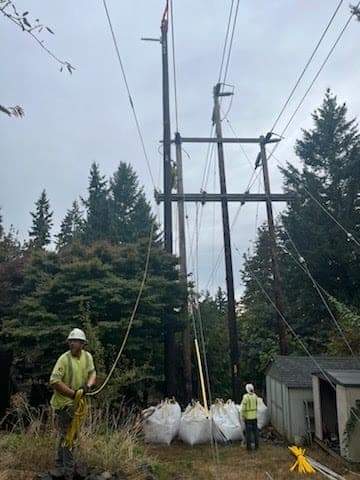
Contact with power lines remains one of the leading causes of crane-related fatalities. OSHA establishes strict protocols for work near energized lines.
Minimum Clearance Distances
For power lines rated 50 kV or below, maintain at least 10 feet clearance from any part of the crane or load. For lines over 50 kV, required clearances increase based on voltage—up to 25 feet for lines rated 501 kV to 1,000 kV.
If equipment must operate within these minimum distances, additional precautions are required including de-energizing and grounding lines, using proximity warning devices, or implementing dedicated spotters and defined work procedures.
Regional Considerations
Projects in rural areas of Eastern Washington, Northern Idaho, and Eastern Oregon often encounter varied power line configurations including agricultural service lines, rural distribution systems, and transmission corridors. Early identification of power line locations and voltages should be part of every project's site assessment.
Work Area Control and Personnel Safety
OSHA requires establishing and maintaining a safe work zone around crane operations to protect workers from struck-by and crushing hazards.
Barricades and Access Control
The area within the crane's swing radius or where loads will travel must be barricaded to prevent unauthorized entry. Only essential personnel with specific roles in the lift should be allowed in these areas.
Project managers should coordinate with crane operators and site supervisors to establish clear boundaries and communication protocols. Visible barriers, warning signs, and designated spotters help maintain safe separation between crane operations and other site activities.
Tag Lines and Load Control
Loads must be controlled during lifting to prevent dangerous swinging. Tag lines or other load control devices should be used unless the lifting conditions make them unnecessary. Never allow workers to ride on loads or position themselves where they could be struck by moving loads.
Weather and Environmental Considerations
Environmental conditions significantly affect crane safety, and OSHA requires operations to cease when conditions become hazardous.
Wind Speed Limitations
Manufacturers specify maximum wind speeds for safe crane operation. Operators must monitor conditions and cease operations when wind speeds approach or exceed these limits. For cranes with high profiles or when handling loads with large surface areas, wind becomes an even more critical factor.
In the Inland Northwest, afternoon winds and seasonal weather patterns require careful planning. Winter conditions bring additional challenges including ice accumulation, reduced visibility, and frozen ground that affects stability.
Temperature Extremes
Cold temperatures can affect hydraulic systems, cause ice formation, and create frozen ground conditions that impact crane stability. Hot weather affects equipment performance and operator alertness. Project schedules should account for weather-related operational constraints, particularly during Eastern Washington's temperature extremes.
Documentation and Record Keeping
Proper documentation demonstrates compliance and provides critical records in case of incidents or regulatory inspections.
Essential Records
Maintain records of operator certifications and employer evaluations, equipment inspection reports and maintenance logs, lift plans for critical and complex operations, pre-lift meeting attendance and discussion points, incident reports and corrective actions, and training records for all crane-related personnel.
Retention Requirements
OSHA and industry best practices recommend retaining crane operation records for the duration of equipment use plus several years. Certification records should be immediately available for inspection, while detailed lift plans and inspection records provide valuable documentation of safety practices.
Working with Qualified Crane Service Providers
One of the most effective ways project managers can ensure OSHA compliance is by partnering with professional crane service providers who make safety and regulatory compliance core business practices.
What to Look For
Choose crane service providers who maintain current NCCCO certification for all operators, conduct thorough equipment inspections and maintenance, provide comprehensive lift planning services including PE-stamped engineering when required, understand regional jobsite challenges and conditions, and carry appropriate insurance and demonstrate a strong safety record.
At Central Washington Crane and Rigging, our operators maintain NCCCO certification, and we provide comprehensive support for all aspects of crane operations—from initial lift planning through final execution. Our 20-plus years of experience across Eastern Washington, Northern Idaho, and Eastern Oregon means we understand both federal OSHA requirements and regional operational challenges.
The Project Manager's Role in Crane Safety
While crane operators and service providers bear primary responsibility for equipment operation and safety, project managers play a crucial role in creating conditions for safe crane operations.
Key Responsibilities
Project managers should ensure adequate planning time for complex lifts, communicate site-specific hazards and conditions, coordinate crane operations with other site activities, verify operator certifications and qualifications, enforce work area access controls, provide adequate resources for safety measures, and support crane operators when they stop work due to safety concerns.
Authority to Stop Work
OSHA gives crane operators explicit authority to refuse lifts or stop operations when they have safety concerns. Project managers should support this authority and create a culture where safety concerns can be raised without fear of reprisal. Addressing safety issues proactively prevents incidents that could result in injuries, equipment damage, and significant project delays.
Consequences of Non-Compliance
OSHA violations related to crane operations can result in substantial penalties. Serious violations—those with substantial probability of death or serious physical harm—currently carry penalties of up to $16,131 per violation. Willful or repeated violations can result in penalties exceeding $161,000 per violation.
Beyond direct financial penalties, non-compliance can lead to project delays while citations are addressed, increased insurance costs and difficulty obtaining coverage, damage to organizational reputation, and civil liability in case of incidents or injuries.
Staying Current with Regulatory Changes
OSHA periodically updates crane safety standards in response to industry developments and incident investigations. Project managers should stay informed of regulatory changes through industry associations, safety training programs, and communication with crane service providers who monitor regulatory developments.
Professional crane service providers typically maintain current knowledge of OSHA requirements and industry best practices, making them valuable partners in navigating the regulatory landscape.
Regional Considerations for the Inland Northwest
Projects in Eastern Washington, Northern Idaho, and Eastern Oregon face unique challenges that affect crane operations and OSHA compliance.
Geographic Factors
Remote jobsite locations require careful mobilization planning and may limit access to backup equipment or specialized resources. Varied terrain conditions demand site-specific ground assessment and preparation. Seasonal weather patterns affect operational planning and require contingency scheduling.
Industry-Specific Applications
The region's diverse industries—agriculture, food processing, aerospace, construction, energy, and mining—each present unique lifting challenges. Working with crane service providers familiar with these applications helps ensure both compliance and operational efficiency.
Best Practices for Project Success
Successful project managers integrate crane safety and OSHA compliance into overall project planning from the start.
Early Planning
Include crane service providers in pre-construction planning to identify potential challenges, establish realistic schedules that account for weather and operational constraints, and budget adequately for proper equipment, planning services, and safety measures.
Clear Communication
Establish protocols for communication between crane operators, site supervisors, and other trades. Regular safety meetings that include crane operation topics keep safety awareness high across the entire project team.
Continuous Improvement
After significant lifts or at project milestones, conduct after-action reviews to identify lessons learned and opportunities for improvement. Document best practices and challenges to inform future projects.
Partner with Experience and Expertise
Navigating OSHA compliance requirements for crane operations doesn't have to be overwhelming. Partnering with experienced professionals who prioritize safety and understand regulatory requirements creates the foundation for successful projects.
Central Washington Crane and Rigging brings over 20 years of crane and rigging experience to projects throughout Eastern Washington, Northern Idaho, and Eastern Oregon. Our NCCCO-certified operators, comprehensive lift planning services, and commitment to safety excellence help project managers meet their objectives while maintaining full OSHA compliance.
From our strategic location in Moses Lake, we provide crane services, rigging expertise, machinery moving, and commercial storage solutions for construction, industrial, and infrastructure projects across the region. Our team understands both the regulatory requirements and the practical realities of crane operations in the Inland Northwest's diverse conditions and industries.
Get Started with Confidence
Whether you're planning a complex lift, need ongoing crane support for a long-term project, or want to discuss OSHA compliance requirements for your upcoming work, our experienced team is ready to help.
Contact Central Washington Crane and Rigging today to discuss your project needs. We'll provide expert guidance on equipment selection, lift planning, regulatory compliance, and safe execution—delivering the comprehensive support that keeps your project on schedule and your team safe.
Central Washington Crane and Rigging | Moses Lake, WA | Serving Eastern WA, Northern ID, and Eastern OR