5 Questions to Ask Before Hiring a Crane Service in Moses Lake
·10 min read
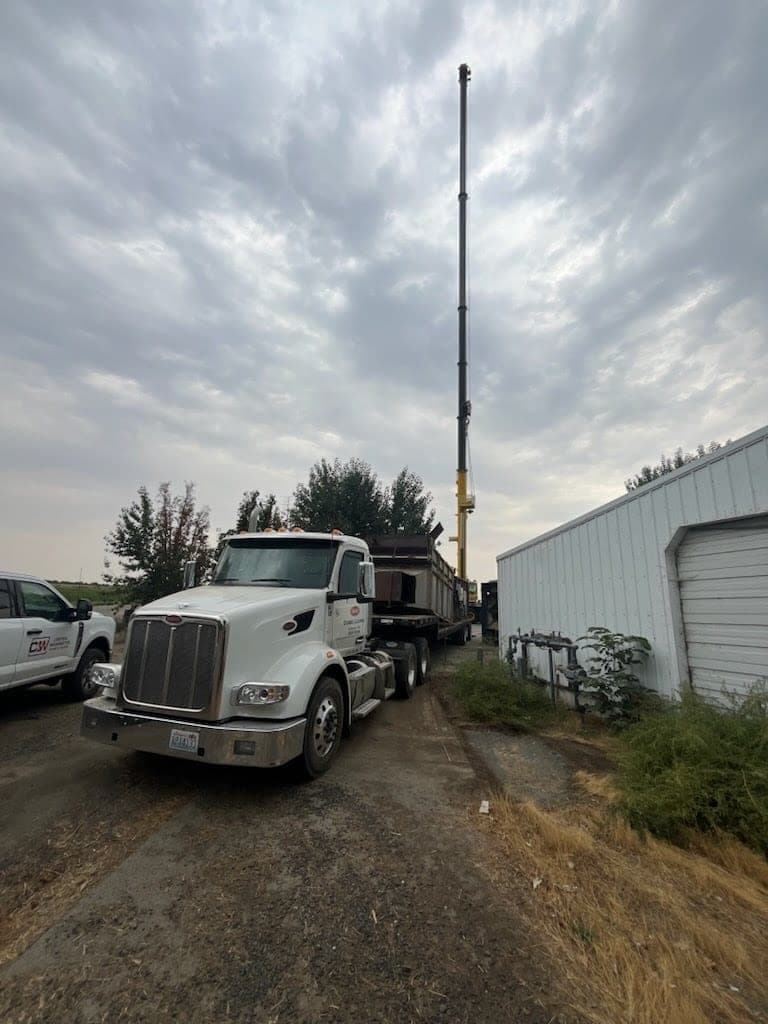
Choosing the right crane service for your Eastern Washington project isn't just about finding the lowest price or the closest available crane. The crane company you hire becomes a critical partner in your project's safety, timeline, and success. A poor choice can result in delays, unexpected costs, safety incidents, or equipment damage that far exceeds any initial savings.
Whether you're managing data center construction in Moses Lake, installing equipment at a food processing facility in the Tri-Cities, handling agricultural machinery moves, or coordinating construction in Spokane, asking the right questions upfront helps you identify professional crane service providers who deliver on their promises.
After over 20 years operating throughout Eastern Washington, Northern Idaho, and Eastern Oregon, we've seen what happens when project managers ask good questions—and when they don't. These five essential questions will help you evaluate crane service providers and make confident hiring decisions.
Question 1: Are Your Operators NCCCO Certified?
This might seem like an obvious starting point, but you'd be surprised how many crane service companies either dodge this question or claim their operators are "experienced" without providing actual credentials.
Why This Matters
NCCCO (National Commission for the Certification of Crane Operators) certification isn't optional—it's the industry standard that OSHA recognizes for crane operator competency. Certified operators have passed rigorous written and practical examinations demonstrating they understand load charts, rigging principles, safety protocols, equipment limitations, and operational procedures.
More importantly, NCCCO certification is required by federal OSHA regulations for construction crane operations. Hiring uncertified operators exposes you to regulatory violations, potential fines, increased liability, and elevated accident risk.
What to Listen For
A professional crane service provider will answer this question immediately with "yes" and offer to provide certification documentation without hesitation. They should be able to show you current certification cards for every operator who might work on your project, with certifications matching the equipment type they'll operate.
Red flags include vague answers like "our operators are very experienced" without mentioning certification, claims that "certification isn't necessary for this type of work," reluctance to provide documentation, or expired certifications.
Follow-Up Questions
Don't stop at "yes." Ask to see the actual certification cards, verify that certifications match the crane types you need (telescopic boom, lattice boom, etc.), confirm the expiration dates are current, and inquire about how long operators have worked for the company.
At Central Washington Crane and Rigging, all our operators maintain current NCCCO certification appropriate to the equipment they operate. We provide certification documentation as part of our standard pre-project paperwork because we know professional clients expect—and deserve—verification of credentials.
Question 2: What's Included in Your Service?
This question separates comprehensive crane service companies from bare equipment rental operations. The answer reveals whether you're getting complete, turnkey service or just a crane that you'll need to figure out how to use.
Why This Matters
"Crane service" can mean very different things. Some companies provide only equipment—you supply your own certified operator, rigging, insurance, and liability. Others offer complete operated-and-maintained services including certified operators, rigging equipment and expertise, lift planning support, insurance coverage, and project coordination.
Understanding exactly what's included prevents mid-project surprises when you discover the quoted price doesn't cover critical services you assumed were included.
What to Listen For
A comprehensive answer that clearly delineates what's included should address the crane equipment and transportation to your site, certified NCCCO operator(s), rigging equipment (slings, shackles, spreader beams, etc.), rigging personnel if needed for complex operations, lift planning consultation, insurance coverage and liability protection, mobilization and demobilization, and any limitations or exclusions.
Companies providing bare equipment rental should be upfront about this. There's nothing wrong with equipment-only rental for clients who have their own operators and rigging capabilities, but clarity prevents misunderstandings.
Follow-Up Questions
Dig deeper by asking whether rigging equipment is included or additional cost, if engineering support for lift plans is available, what happens if operations extend beyond estimated time, how weather delays are handled, and whether mobilization is a separate charge or included in the quote.
At Central Washington Crane and Rigging, we provide comprehensive operated-and-maintained crane services. When you hire us, you get the complete package—certified operators, appropriate rigging equipment, lift planning support, and single-point coordination. We also offer additional services including PE-stamped engineered lift plans, specialized rigging for complex applications, machinery moving beyond basic crane lifts, and commercial storage for project materials.
Question 3: Can You Provide References for Similar Projects?
Experience matters enormously in crane operations. An operator skilled at residential construction may struggle with industrial equipment installation. A company experienced in flat, urban sites might not understand the challenges of remote, uneven terrain common in Eastern Washington.
Why This Matters
References provide independent verification of a crane service provider's capabilities, reliability, safety record, and professionalism. Talking to past clients reveals information you won't get from marketing materials or sales pitches—information about whether the company shows up when promised, handles challenges professionally, prioritizes safety, and delivers on commitments.
More specifically, references from similar projects demonstrate that the crane service provider understands your type of work. If you're installing processing equipment at a food facility, references from similar installations carry more weight than references from general construction.
What to Listen For
Professional crane service providers readily provide references and should offer contacts from projects similar to yours. Listen for specifics—names, phone numbers, actual projects you can verify—not vague claims about "hundreds of satisfied customers."
Warning signs include refusal to provide references, claims that "all our clients are confidential," or generic references that don't relate to your project type.
Follow-Up Questions
When checking references, ask specific questions: Did the crane service show up on time as scheduled? Were operators professional and safety-focused? Did the company handle unexpected challenges well? Would they hire this crane service again? Were there any safety incidents or close calls? Did billing match the quoted price without surprise charges?
Central Washington Crane and Rigging serves clients throughout Eastern Washington's diverse industries. We readily provide references from data center projects, agricultural operations, food processing installations, construction developments, and industrial facilities. Our two decades serving the Columbia Basin means we've built long-term relationships with repeat clients who appreciate our professionalism and reliability.
Question 4: What's Your Safety Record?
This question might make some crane service providers uncomfortable—which tells you something important. Companies with strong safety records discuss them proudly. Companies with poor safety performance try to change the subject.
Why This Matters
Crane operations involve significant hazards. Accidents result in injuries, fatalities, project delays, regulatory scrutiny, insurance claims, and potential liability exposure. Your choice of crane service provider directly affects jobsite safety, and their safety record provides the best predictor of future performance.
Beyond moral and ethical obligations to protect workers, safety incidents create practical problems for your project including work stoppages during investigation, OSHA inspections and potential citations, project delays and cost overruns, insurance complications, and potential reputation damage.
What to Listen For
Safety-focused crane service providers discuss their safety programs, training protocols, incident rates, and safety certifications willingly. They should be able to describe their safety protocols including pre-job safety meetings, daily equipment inspections, lift planning procedures, communication systems, and weather monitoring.
Ask specifically about lost-time incidents, recordable injuries, OSHA citations, and equipment accidents over the past several years. Professional companies maintain these records and can discuss their safety performance objectively.
Follow-Up Questions
Probe deeper by asking what happens if an operator has safety concerns during a lift, how the company handles weather limitations on crane operations, what training operators receive beyond NCCCO certification, how equipment maintenance and inspection are handled, and whether you can see recent inspection records for the equipment you'll be using.
At Central Washington Crane and Rigging, safety represents our highest priority. We maintain comprehensive safety programs, conduct regular equipment inspections, provide ongoing operator training, and empower operators to stop work when safety concerns arise. Our strong safety record reflects this commitment, and we're happy to discuss our safety protocols and performance with prospective clients.
Question 5: What Happens If Something Goes Wrong?
Nobody plans for problems, but professional crane service providers prepare for them anyway. This question reveals how a company handles challenges, communicates during difficulties, and stands behind their work.
Why This Matters
Projects rarely go exactly as planned. Weather changes, unexpected site conditions emerge, equipment issues occur, or project requirements shift. How your crane service provider responds to these challenges affects whether minor hiccups become major problems.
Additionally, knowing the provider's insurance coverage, liability limits, and contingency plans helps you understand risk allocation and what happens if serious problems occur.
What to Listen For
Professional crane service providers describe their contingency planning including backup equipment availability if primary equipment fails, alternative scheduling options for weather delays, emergency response procedures for incidents, insurance coverage and liability protection, and communication protocols when problems arise.
They should discuss their process for stopping work when safety concerns emerge, even if it delays the project. This demonstrates that safety takes precedence over schedule pressure—which is exactly what you want.
Follow-Up Questions
Ask specific questions about insurance coverage limits, what their liability insurance covers and excludes, whether they have backup equipment available if needed, how quickly they can respond to equipment problems, what happens to billing if weather prevents operations, and how they communicate with clients when problems occur.
Central Washington Crane and Rigging maintains appropriate insurance coverage for our operations and provides certificates of insurance as standard practice. We also maintain backup equipment and extensive regional support networks developed over 20 years of operations. When problems arise—and occasionally they do despite best planning—we communicate directly with clients, present options, and work collaboratively toward solutions that keep projects moving safely and efficiently.
Beyond These Five: Additional Considerations
While these five questions cover the essentials, several additional factors deserve consideration when hiring crane services in Eastern Washington.
Local Knowledge and Regional Experience
Operating throughout the Columbia Basin, Northern Idaho, and Eastern Oregon requires understanding regional conditions including soil types and ground bearing capacity across the area, seasonal weather patterns and wind considerations, typical applications across regional industries, logistics of remote site access, and local permit requirements and regulations.
Crane service providers based in or thoroughly familiar with Eastern Washington bring practical knowledge that distant providers lack. We're based in Moses Lake at the geographic center of the Columbia Basin specifically because this location enables efficient service throughout the region we know best.
Response Time and Availability
How quickly can the crane service provider mobilize for your project? Do they maintain local equipment, or will they transport cranes from distant locations? For time-sensitive projects or emergency situations, response time matters significantly.
Companies with local operations typically provide faster response than those bringing equipment from Western Washington or other distant locations.
Integrated Services
Some projects benefit from integrated services beyond basic crane operations. Machinery moving, specialized rigging, commercial storage, transloading services, and engineering support simplify logistics when available from a single provider rather than coordinating multiple vendors.
At Central Washington Crane and Rigging, we provide integrated solutions that streamline project coordination. Our capabilities include not just crane services but also machinery moving, commercial storage throughout the Columbia Basin, transloading for rail-to-truck and barge-to-truck transfers, and PE-stamped engineered lift plans. This comprehensive approach simplifies your planning and provides single-point accountability.
Making Your Decision
After asking these questions and evaluating responses, you should have clarity about which crane service providers deserve serious consideration. Look for companies that answer questions directly and transparently, provide documentation without hesitation, demonstrate strong safety commitment, have relevant regional experience, and offer appropriate service levels for your project.
The lowest price doesn't always deliver the best value. Consider the total package including safety record and commitment, operator qualifications and experience, equipment condition and reliability, insurance and liability protection, responsiveness and communication, and regional knowledge and capabilities.
Remember that crane service represents a relatively small portion of most project budgets, but choosing the wrong provider can impact your entire project through delays, safety incidents, or quality problems. Investing time in proper due diligence pays dividends through safer operations and smoother project execution.
Work with Proven Regional Experts
When your Eastern Washington project requires crane services backed by NCCCO-certified operators, comprehensive capabilities, and two decades of regional experience, contact Central Washington Crane and Rigging.
We answer all five of these questions confidently because our business is built on safety, professionalism, and delivering what we promise. Our range of cranes — telehandlers through 230-ton crawlers — along with certified operators, comprehensive rigging capabilities, and integrated services provide complete solutions for projects throughout the Columbia Basin and beyond.
We serve agriculture, food processing, data centers, construction, manufacturing, and industrial projects across Eastern Washington, Northern Idaho, and Eastern Oregon. Our Moses Lake location provides efficient access throughout this region, while our experience means we understand the applications, conditions, and challenges specific to your area.
Ready to discuss your project? Contact us today for straightforward answers to these questions and any others you have. We'll evaluate your requirements, provide honest assessment of how we can help, and deliver transparent pricing that reflects the comprehensive, professional service we provide.
Ask the questions that matter. Get answers you can trust. Experience crane services that deliver on commitments.
Central Washington Crane and Rigging | Moses Lake, WA | Ask Us Anything | Serving Eastern WA, Northern ID, and Eastern OR