Rigging Services in Moses Lake: More Than Just Crane Work
·6 min read
When people think about crane services, they usually focus on the crane itself—the boom, the capacity, the reach. But here's the thing: a crane is only as good as the rigging that connects it to the load.
At Central Washington Crane & Rigging, we're based right here in Moses Lake, and rigging isn't just something we do alongside crane work—it's a core part of what we do. If you're moving heavy equipment, installing machinery, or handling any kind of industrial lift in the Moses Lake area, understanding the difference between a crane company and a crane-and-rigging company matters.
What Is Rigging, Really?
Rigging is the system of ropes, chains, slings, shackles, and beams that connects your load to the crane. It's also the engineering and planning that goes into making sure that connection is safe, balanced, and effective.
A rigger needs to understand:
- Load weight and center of gravity (where the balance point actually is)
- Sling angles and tension (how the angle affects the load on each sling)
- Attachment points (where you can safely connect to the load without damaging it)
- Environmental factors (wind, ground conditions, overhead clearances)
- Equipment ratings (every piece of rigging gear has load limits)
Get any of these wrong, and you've got a dangerous situation—or at best, a lift that doesn't work and wastes everyone's time.
Why Moses Lake Needs Rigging Expertise
Moses Lake isn't just a residential community. You've got:
- Data centers requiring precision equipment installation
- Agricultural operations moving grain equipment, irrigation systems, and processing machinery
- Manufacturing facilities installing production lines and heavy equipment
- Construction projects handling structural steel and precast concrete
- Food processing plants upgrading or relocating equipment
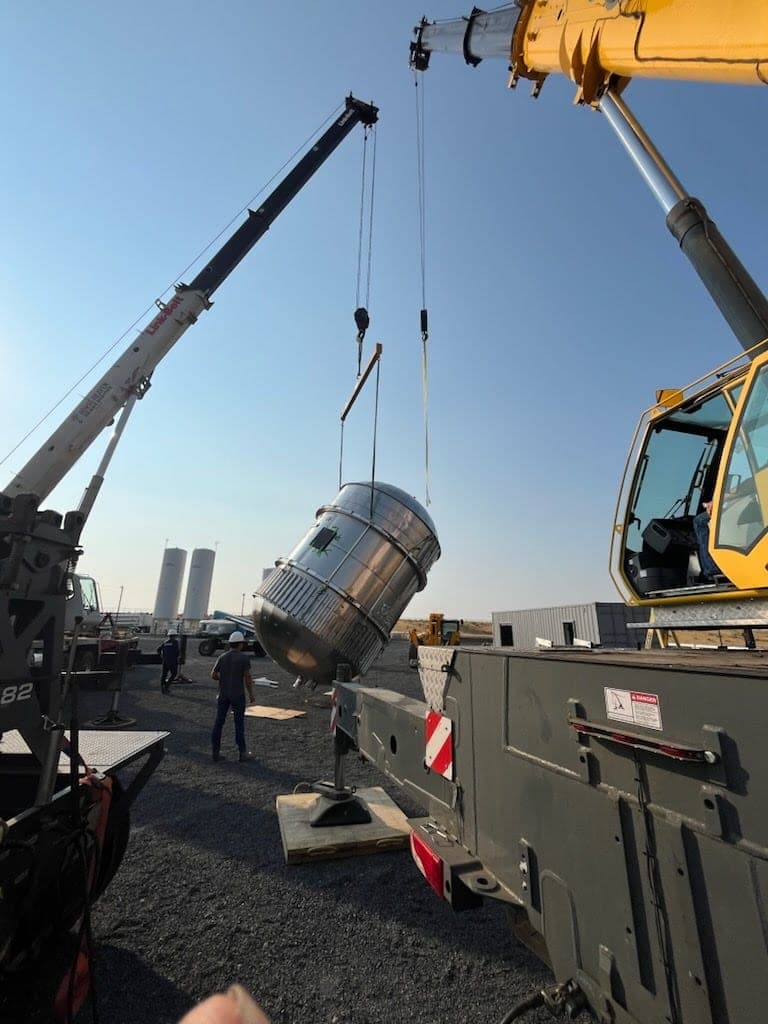
All of that requires rigging. A 10-ton piece of manufacturing equipment doesn't come with convenient lifting points and a perfectly centered balance. A chiller unit going on a roof needs to be rigged so it doesn't swing in the wind. An awkwardly shaped tank needs spreader beams to distribute the load properly.
This is where rigging expertise separates capable providers from those who are just winging it.
The Difference Between Crane Rental and Crane-and-Rigging Services
Some companies rent cranes. They'll bring the crane, operate it, and expect you to handle the rigging—or they'll provide basic rigging but without the engineering knowledge to handle complex lifts.
That works fine for simple lifts where the load is balanced, the weight is known, and the attachment points are obvious. But for industrial and commercial work in Moses Lake, you usually need more than that.
Here's what full rigging services include:
Load Assessment: We figure out the actual weight (not just the manufacturer's spec, but the real weight including contents, modifications, or uncertainty factors). We determine the center of gravity, which isn't always where you'd expect.
Rigging Design: We select the right slings, shackles, and beams for the job. We calculate sling angles to make sure we're not overloading any component. We identify safe attachment points on the load.
Engineered Lift Plans: For complex or critical lifts, we provide PE-stamped engineered lift plans. That's a professional engineer reviewing the lift plan and certifying it meets safety standards. Not every project requires this, but when it does, we handle it.
Execution: Our NCCCO-certified operators don't just run the crane—they're trained riggers who understand the whole system. They inspect rigging equipment before every lift, monitor conditions during the lift, and adjust as needed.
Common Moses Lake Rigging Applications
Here's the kind of rigging work we regularly handle in Moses Lake:
Data Center Equipment:
- Server racks and UPS systems (heavy, awkward dimensions)
- HVAC chillers and cooling equipment
- Backup generators
- Transformer installations
Agricultural and Food Processing:
- Grain augers and elevator components
- Processing equipment (mixers, conveyors, packaging lines)
- Cold storage equipment
- Irrigation system components
Manufacturing:
- Production machinery installation
- Equipment relocation within facilities
- Overhead crane installation (yes, we rig cranes to install cranes)
- Press equipment and tooling
Commercial Construction:
- Structural steel placement
- Precast concrete panels
- Rooftop mechanical units
- Glass and curtainwall sections
Emergency and Breakdown Work:
- Equipment removal after failure
- Emergency HVAC replacement
- Machinery extraction for repair
Spreader Beams, Lifting Beams, and Specialized Rigging
Sometimes a standard rigging setup won't work. Maybe the load has weak attachment points that can't handle concentrated force. Maybe the load is long and needs to stay level. Maybe you're working in tight quarters with limited headroom.
That's where specialized rigging equipment comes in:
Spreader Beams: These distribute the load across multiple attachment points and reduce sling angles. If you're lifting something that would be damaged by steep sling angles or concentrated loads, you need a spreader beam.
Lifting Beams: These keep the load level and provide precise control. Common for long equipment or machinery that needs to stay horizontal during the lift.
Custom Rigging Solutions: Sometimes we need to fabricate custom attachment points or design a rigging setup specific to your equipment. We've handled plenty of "this doesn't fit any standard rigging scenario" situations in Moses Lake.
We own our rigging equipment—we're not renting it from someone else or showing up unprepared. If your project needs specialized rigging, we've probably got it or can get it.
PE-Stamped Lift Plans: When You Need Them
Some lifts require an engineered lift plan stamped by a Professional Engineer (PE). This is common for:
- Critical lifts where failure could cause major damage or injury
- Lifts over public spaces or occupied buildings
- Projects with specific engineering requirements in the contract
- Unusual or complex rigging situations
We can provide PE-stamped lift plans. Not every crane company offers this, and waiting to find an engineer after you've already hired a crane company delays your project. We handle it as part of the service.
Safety Is Non-Negotiable
Rigging failures are one of the leading causes of crane-related accidents. Slings that fail, loads that shift, rigging that wasn't calculated properly—these aren't just inconveniences, they're serious safety hazards.
Every one of our operators is NCCCO certified, which means they've been tested on rigging principles, load calculations, and safety procedures. We inspect rigging equipment before every use. We follow OSHA and ASME standards. And if a lift doesn't feel right or the conditions aren't safe, we stop and reassess.
We've been doing this for over 20 years in the Columbia Basin. We've seen what happens when rigging isn't taken seriously, and we're not interested in cutting corners.
What to Ask About Rigging Services
If you're hiring a crane company in Moses Lake—or anywhere in Eastern Washington—here's what to ask about rigging:
- Do you provide rigging, or just the crane? (Some companies expect you to handle rigging separately.)
- Are your operators trained in rigging, or just crane operation? (NCCCO certification covers both.)
- Can you provide engineered lift plans if needed? (Critical for complex projects.)
- What rigging equipment do you own? (Spreader beams, various sling types, shackles, etc.)
- How do you handle load calculations and center of gravity? (This should be part of every lift plan.)
If a company can't answer these clearly, or if they treat rigging as an afterthought, that's a problem.
Moses Lake's Central Location, Regional Rigging Expertise
Being based in Moses Lake means we're centrally located in the Columbia Basin. We serve Moses Lake, Ephrata, Quincy, Othello, and the surrounding area regularly. But we also work throughout Eastern Washington, Northeastern Oregon, and North Idaho.
That regional experience matters for rigging. We've handled lifts in different soil conditions, different wind patterns, different building types. We know what works in an open agricultural field versus a tight industrial facility versus a congested construction site.
More Than Just Moving Heavy Things
Rigging isn't glamorous. It's the behind-the-scenes work that makes the crane lift possible. But when it's done right, projects stay on schedule, equipment doesn't get damaged, and everyone goes home safe.
If your Moses Lake project involves moving heavy equipment, installing machinery, or handling any kind of industrial lift, we'd be glad to talk through the rigging requirements with you.
Call us at 509-797-4092, email tom@cwcrane-rigging.com, or reach out through our website at cwcrane-rigging.com. We'll assess your project, provide a clear quote that includes all rigging equipment and planning, and show up ready to handle the whole job—not just the crane part.
We've been doing crane and rigging work in Moses Lake and throughout the Columbia Basin for over 20 years. It's what we do, and we take it seriously.